Mount Rinjani: Complete Guide to Hiking Indonesia’s Second Highest Volcano
Mount Rinjani is one of Indonesia’s most spectacular natural landmarks and a dream destination for hikers from around the world. Located on Lombok Island, Mount Rinjani stands at 3,726 meters above sea level, making it the second-highest volcano in Indonesia. Famous for its dramatic landscapes, crater lake, and challenging trekking routes, Mount Rinjani offers an unforgettable adventure for nature lovers and outdoor enthusiasts.
Where Is Mount Rinjani Located?
Mount Rinjani is located on Lombok Island, West Nusa Tenggara, Indonesia. It is part of the Mount Rinjani National Park, a protected area covering more than 41,000 hectares of mountains, forests, and savannah.
Lombok is easily accessible from Bali by fast boat or domestic flight, making Mount Rinjani a popular trekking destination for international travelers.
Why Mount Rinjani Is One of the Best Hikes in Southeast Asia
Mount Rinjani is often ranked among the top trekking destinations in Southeast Asia because it offers:
Dramatic volcanic landscapes
Panoramic summit views above the clouds
The stunning Segara Anak crater lake
Natural hot springs
Diverse ecosystems and wildlife
Few mountains in the region combine physical challenge and natural beauty as perfectly as Mount Rinjani.
Height and Geography of Mount Rinjani
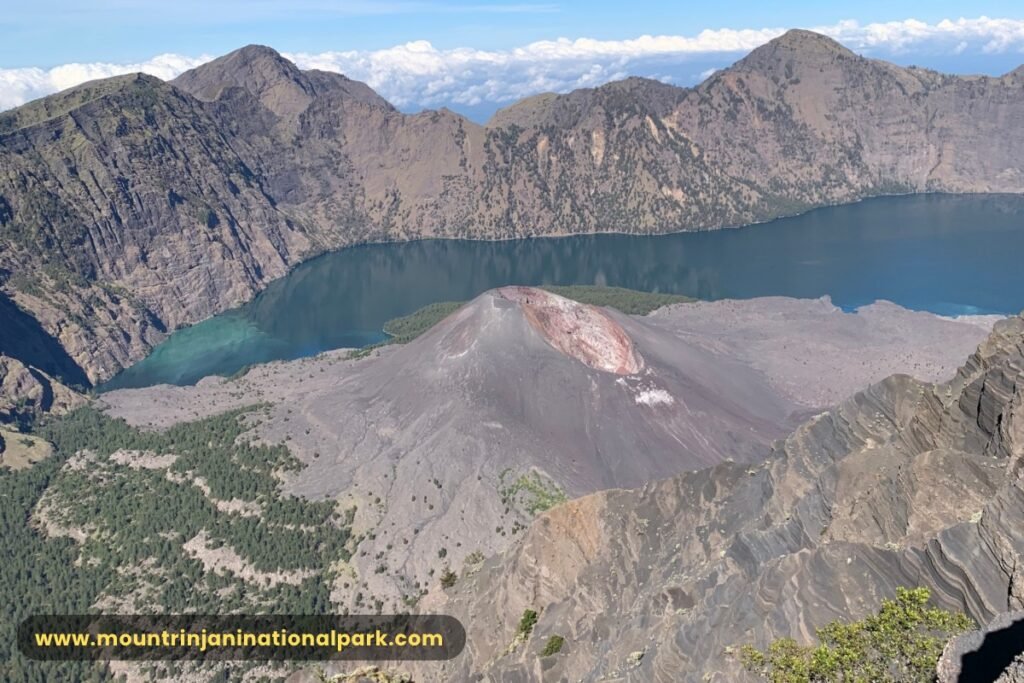
Mount Rinjani rises to 3,726 meters, dominating Lombok’s skyline. The volcano features a massive caldera formed by a historic eruption, inside which lies Segara Anak Lake and the active cone known as Mount Barujari.
The terrain varies from tropical forest at lower elevations to rocky volcanic slopes near the summit, offering hikers constantly changing scenery.
Mount Rinjani National Park
Mount Rinjani is protected under Mount Rinjani National Park, which was established to preserve the mountain’s unique ecosystem. The park is home to:
Rare plant species
Long-tailed macaques
Deer and various bird species
To protect the environment, all hikers must register officially and follow strict regulations.
Popular Mount Rinjani Trekking Routes
There are several trekking routes to Mount Rinjani, each offering a different experience.
Sembalun Route
The Sembalun route is the most popular path to the summit. It offers wide savannah landscapes and is considered the best route for reaching the peak due to its gradual ascent.
Senaru Route
The Senaru route passes through dense tropical forests and is often chosen by hikers who want to explore Segara Anak Lake. This route is scenic but more demanding.
Torean Route
The Torean route is famous for waterfalls, rivers, and dramatic canyon views. It is often used as a descent route after visiting the crater lake.
Mount Rinjani Summit (3,726 m)
Reaching the summit of Mount Rinjani is the ultimate reward. From the top, hikers can witness a breathtaking sunrise with views of Lombok, Bali, Sumbawa, and even Mount Agung on clear days.
The final ascent is steep and challenging, but the experience is widely considered worth every step.
Segara Anak Lake and Hot Springs
Segara Anak Lake is a turquoise volcanic lake located inside Rinjani’s caldera. Nearby, natural hot springs provide a perfect place to relax after long days of trekking. Many hikers consider this area the spiritual heart of Mount Rinjani.
Best Time to Hike Mount Rinjani
The best time to hike Mount Rinjani is during the dry season, from April to October. During this period, weather conditions are safer, and trails are more accessible. Mount Rinjani is usually closed from January to March due to heavy rain and safety concerns.
Difficulty Level and Fitness Preparation
Mount Rinjani is considered a moderate to difficult trek. Hikers should be physically fit and prepared for:
Long hiking days
Steep ascents and descents
Cold temperatures at night
Proper training before the hike is highly recommended.
Permits and Regulations for Mount Rinjani
All hikers must obtain an official permit from Mount Rinjani National Park. Independent trekking is not allowed, and hikers must be accompanied by a licensed guide or trekking operator.
What to Pack for Mount Rinjani Trek
Essential items include:
Hiking boots
Warm clothing
Rain jacket
Headlamp
Personal medication
Most trekking operators provide camping equipment and meals.
Safety Tips for Hiking Mount Rinjani
Always follow your guide’s instructions
Stay hydrated
Do not litter
Respect local customs and nature
Safety should always be the top priority.
Why You Should Use a Licensed Trekking Operator
Using a licensed trekking operator ensures:
Legal permits
Professional guides
Proper safety standards
Support for local communities
This also helps preserve Mount Rinjani for future generations.
Mount Rinjani is more than just a mountain—it is a life-changing adventure. With its stunning landscapes, challenging trails, and cultural significance, Mount Rinjani truly deserves its reputation as one of Indonesia’s most iconic trekking destinations.